
Qualifying for a Mortgage While Owning Two Homes
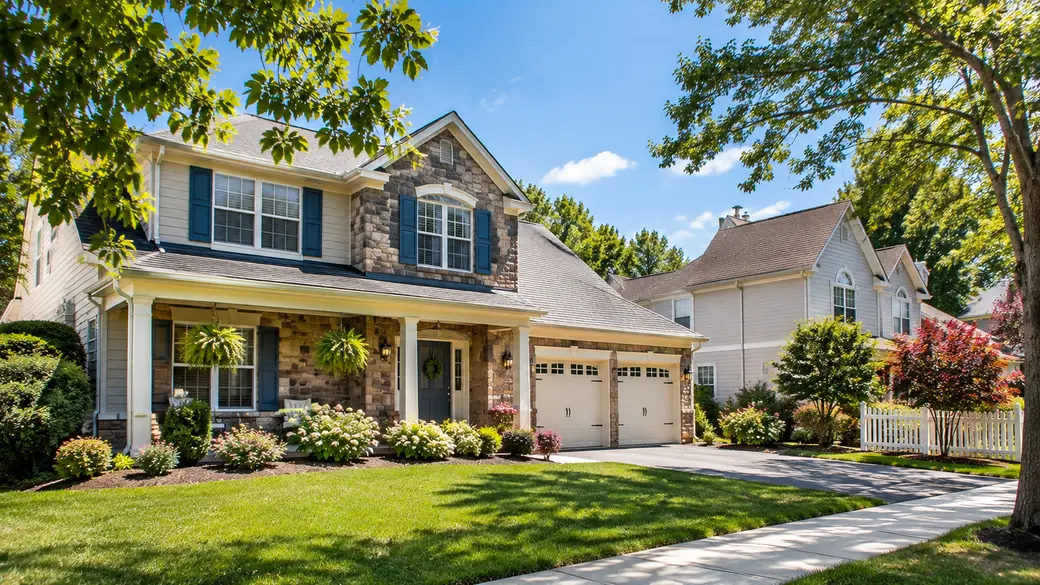
Qualifying for a mortgage while owning two homes is possible when verified income, recurring debts, credit, and liquid reserves support both housing payments under the applicable loan rules. For Rockville move-up buyers, lenders generally count the full principal, interest, taxes, insurance, and applicable association dues for each property until a documented sale or an eligible rental-income calculation changes the file. The key is to have the lender underwrite the exact overlap scenario before you commit to the next purchase.
Timing matters more than it did a year ago. Homes across Montgomery County averaged 34 days on market in September 2026, two days longer than a year earlier, while active listings countywide were up 27.2%. The 30-year fixed-rate average was 7.18% as of November 5, 2026, compared with 6.22% a year earlier, according to Freddie Mac. A longer sale period at a higher rate makes the overlap worth planning for in writing.
Who This Guide Is For
This guide is for Rockville homeowners whose next purchase may overlap with their current mortgage.
- You own a home with a mortgage and are actively shopping for a new primary residence.
- You are under contract on a new property before your current home has sold.
- You have already purchased a new home and are temporarily carrying two housing payments.
- You may retain the former home as a rental rather than selling it immediately.
How Lenders Calculate Debt When You Own Two Homes
Lenders calculate debt-to-income ratio, or DTI, by dividing total monthly qualifying debt by gross monthly qualifying income. When you own two homes, the calculation generally includes the full monthly housing expense for both properties: principal, interest, property taxes, homeowners insurance, mortgage insurance where applicable, and HOA or condominium dues.
For homes inside City of Rockville limits, the property tax portion includes the City's real property tax of $0.292 per $100 of assessed value for fiscal year 2027, in addition to county and state charges. Ask your lender to use the current tax bill for each property rather than a generic estimate, because a few hundred dollars a month in taxes can change a two-payment DTI.
Recurring obligations such as auto loans, student loans, personal loans, and required revolving-credit payments are added as well. Fannie Mae conventional loans run through Desktop Underwriter may allow a total DTI up to 50%, provided the automated underwriting findings and the rest of the file support it. FHA manual underwriting uses qualifying-ratio benchmarks and compensating-factor analysis, while VA underwriting considers DTI together with residual-income requirements. USDA guaranteed loans generally use a 41% total-debt benchmark, with exceptions subject to program standards.
A departure residence does not automatically disappear from DTI because you intend to move. The lender must document whether the current home will be sold, retained, or converted to a rental, then apply the loan program's rules to that documented scenario. For conventional financing, Fannie Mae's departure-residence rental-income guidance, updated in its September 2, 2026 Selling Guide release, governs how eligible rent can affect the calculation.
Key Qualifying Thresholds to Know
- Conventional DTI: Eligible Fannie Mae Desktop Underwriter files may reach a 50% total DTI, subject to automated underwriting findings and lender requirements.
- FHA manual-underwriting benchmark: HUD's standard manual-underwriting benchmark is 43% total DTI, although higher ratios may be considered with documented compensating factors under FHA policy.
- Conventional pricing credit score: No published score guarantees the lowest conventional rate. Pricing depends on credit score, loan-to-value ratio, occupancy, loan type, reserves, and each lender's pricing.
- Departure-residence equity threshold: Fannie Mae's current departing-residence rental-income rule does not state a minimum equity percentage. Instead, it requires market-rent documentation and, for borrowers with less than 12 months of property-management experience, six months of PITIA reserves for the vacated home.
The Departure Residence Rule: Using Rental Income to Offset Your Old Mortgage
A documented rental conversion can reduce the DTI impact of your old mortgage, but it does not simply remove the payment. Under Fannie Mae's departing-residence guidance, the lender must establish market rent through a complete appraisal with market rents, Form 1007, or an eligible market-analysis tool using comparable rentals.
For a departing residence, Fannie Mae does not permit a lease agreement to establish qualifying rental income. That means signing a tenant before you apply does not help on a Fannie Mae loan. Freddie Mac applies its own rental-income rules, so if you already have a tenant lined up, ask your lender whether a different loan path treats that lease differently.
The lender calculates adjusted monthly net rental income, or ANRI, by multiplying documented gross market rent by 75%, then subtracting the old home's PITIA. A positive result may offset that property's PITIA only. A negative result becomes part of the borrower's DTI calculation.
For example, assume the former home has a $3,000 monthly PITIA payment and documented market rent of $4,000. Seventy-five percent of that rent equals $3,000, creating a neutral result for the departing residence. If documented market rent is $3,200, 75% equals $2,400, leaving a $600 monthly shortfall in the qualifying calculation.
Fannie Mae also requires six months of PITIA reserves for the vacated property when the borrower has less than 12 months of property-management experience. In the example above, that equals $18,000 held after closing. That requirement is separate from reserves that may apply to other financed properties.
Loan Type Comparison: Qualifying With Two Mortgages
The program rules differ, so borrowers should have the intended two-property scenario reviewed under the appropriate underwriting system before relying on a general benchmark.
| Loan type | Max DTI allowed | Departure-residence rental offset permitted | Minimum down payment on the new purchase | Key restriction when two properties are involved |
|---|---|---|---|---|
| Conventional | Up to 50% on eligible automated-underwriting files | Yes, when market-rent documentation, reserves, and program requirements are met | As low as 3% for eligible primary-residence programs | Additional reserve requirements may apply for other financed properties |
| FHA | Ratios depend on underwriting and compensating factors | Potentially, generally requiring at least 25% equity in the departing home or a qualifying job relocation | As low as 3.5% for eligible borrowers | The new property must be a principal residence |
| VA | DTI is reviewed with residual-income requirements | Potentially, subject to VA documentation and occupancy requirements | 0% for eligible borrowers | The borrower must intend to occupy the new home |
| USDA | Generally 41% total debt, with limited exceptions | Potentially, subject to USDA income and property rules | 0% for eligible borrowers | The home must be an eligible rural-area primary residence |
Sources: Fannie Mae Selling Guide, HUD Handbook 4000.1, VA Lender's Handbook, and USDA HB-1-3555. Lender overlays may be more restrictive than agency or program guidelines. Because USDA financing is limited to eligible rural areas, it is rarely an option for a Rockville purchase.
Strategies to Strengthen Your Qualification
The strongest two-home mortgage file improves the measurements lenders review most closely: DTI, loan-to-value ratio, and reserves.
First, pay down revolving debt before application. Reducing a credit-card payment lowers the monthly obligation used in DTI, which may create room for two housing payments without changing the purchase price.
Second, determine the departure-residence plan early. If you expect to retain the old home as a rental, ask the lender which market-rent documents, reserve amounts, and underwriting conditions apply before building your purchase budget around rental income. A current estimate of your home's value also helps you judge whether selling or renting leaves you in a stronger position.
Third, preserve reserves while planning the down payment. A larger down payment can reduce the new loan amount, improve LTV, and lower the new monthly payment. However, using every available dollar for closing can weaken a file that needs post-closing reserves for the departure residence or other financed properties.
Fourth, coordinate the listing and closing timeline. A documented sale that closes before the new loan funds can remove the old payment from the final debt picture. If an overlap is unavoidable, a clear sale, rental, or retained-property plan gives underwriting a more complete record.
Finally, compare scenarios before making an offer. A mortgage payment estimate can help illustrate how a second housing payment affects the monthly budget, while the affordability calculator can help test different down-payment and debt assumptions. Keep asset accounts stable, avoid new debt, and document major deposits or transfers.
Common Mistake to Avoid
Warning: Do not assume your current mortgage will be excluded from DTI simply because you plan to sell. Until the lender documents an eligible sale, rental-income, or retained-property scenario, the existing payment may remain part of qualification.
What Lenders Want to See in Your Application
Lenders want documentation that confirms how both housing payments fit within your income, debts, credit, and available assets. Expect to provide a current mortgage statement for the existing home and purchase-loan documents, such as the Loan Estimate and estimated PITIA, for the new property.
If you are retaining the former home, the lender may request a market-rent analysis, appraisal documentation, and evidence of available reserves. For a Fannie Mae departing residence using rental-income treatment, borrowers without 12 months of property-management experience need six months of PITIA reserves for that vacated property.
If the old home is listed for sale, expect to provide the listing agreement, an executed contract when available, and documents showing the transaction's status. Lenders also review employment income, tax returns when applicable, credit reports, bank statements, investment accounts, and the source of funds used for closing.
A stable file is easier to underwrite. Avoid opening new credit accounts, financing major purchases, changing jobs without discussion, or moving funds between accounts without documentation while the loan is under review.
Reserves Required: One Mortgage vs Two
Reserve requirements depend on the loan program, underwriting findings, occupancy, transaction type, and number of financed properties.
| Program | Number of financed properties | Minimum months of PITI reserves required on the subject property | Minimum months required on the departure/other property |
|---|---|---|---|
| Conventional, Fannie Mae standard | One-unit principal residence | No minimum reserve requirement under the standard guideline, unless underwriting findings require one | Not applicable |
| Conventional, Fannie Mae standard | Two or more financed properties | Depends on occupancy and underwriting findings | For a qualifying departure residence, 6 months of PITIA when the borrower has less than 12 months of property-management experience; additional reserves for other financed properties are calculated from aggregate unpaid balances |
| Conventional, Freddie Mac standard | One or more financed properties | Determined by Loan Product Advisor findings and loan characteristics | Depends on the transaction, property conversion, LTV, and Freddie Mac reserve requirements |
| FHA | One or more financed properties | No universal reserve-month rule applies to every purchase file | Case-specific based on underwriting, compensating factors, and lender standards |
Sources: Fannie Mae Selling Guide reserve requirements and Fannie Mae departing-residence rental-income guidance. Freddie Mac and FHA reserve treatment should be confirmed against the applicable program guide and lender overlay at application.
Pro-Tip: Obtain a full underwriting pre-approval, not only a pre-qualification, before listing the old home. You will know whether qualification works with both payments, a documented sale scenario, or a rental conversion.
Ready to Run Your Numbers?
Qualifying for a mortgage while owning two homes works best when the financing plan, sale timeline, and next-home search are coordinated early. Hagan Realty has helped Montgomery County homeowners buy and sell since 2001, including move-up households balancing a sale, a purchase, and a lender's conditions at the same time. The team can help you line up a realistic sale price for your current home, a search plan for homes across Rockville, and a timeline your lender can underwrite. Call or text (866) 424-2601, email info@haganrealty.com, or reach out through the contact page.
Frequently Asked Questions
Can I qualify for a new mortgage if I already have one?
Yes. Approval depends on whether your verified income, combined monthly obligations, credit profile, and available reserves support the two-property scenario. Eligible conventional automated-underwriting files may allow DTI up to 50%, but the complete loan file determines the outcome.
Will my current mortgage count against my DTI if I plan to sell the home?
Usually, yes, until the lender can document an eligible sale or apply approved retained-property treatment. An intention to sell, by itself, does not remove the current housing payment from the lender's calculation.
How much do I need in reserves to carry two mortgages simultaneously?
The amount varies by loan program, underwriting findings, occupancy, and the properties financed after closing. Under Fannie Mae's departure-residence rule, a borrower using rental-income treatment without 12 months of property-management experience needs six months of PITIA reserves for that former home.
Can I use future rental income from my departing residence to qualify?
Potentially, if the loan program permits it and the lender documents market rent under the applicable requirements. Fannie Mae generally applies 75% of documented gross market rent, then compares that amount with the departing residence PITIA; a lease agreement cannot establish the rent for this purpose.
What credit score and DTI do I need to qualify for a second home purchase loan?
There is no single credit score that guarantees approval or the lowest conventional rate because pricing also reflects LTV, occupancy, loan type, and reserves. Conventional files may permit DTI up to 50% with eligible automated findings, while FHA, VA, and USDA apply different underwriting standards.
Recent Posts






"My job is to find and attract mastery-based agents to the office, protect the culture, and make sure everyone is happy! "