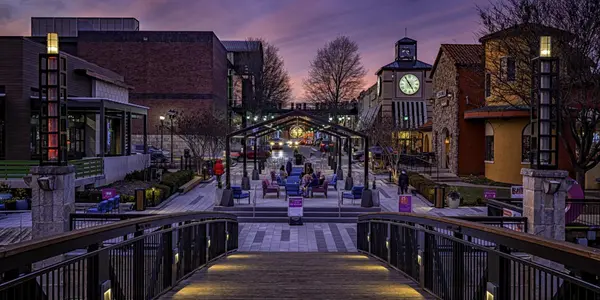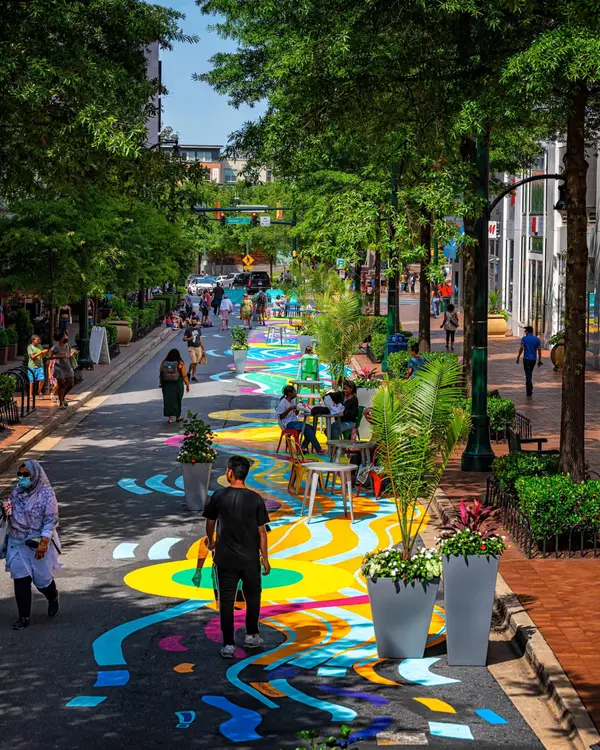
BUY IN MONTGOMERY COUNTY

Join the beautiful community today!

SELL IN MONTGOMERY COUNTY

Reach out to a Hagan Realty expert today!

ALL MONTGOMERY COUNTY LISTINGS

  • The History and Character of Montgomery County

    Established on September 6, 1776, Montgomery County was formed from a portion of Frederick County and named in honor of Major General Richard Montgomery, a Revolutionary War hero. In its early years, the county's economy was primarily agricultural, with numerous small farms cultivating tobacco, wheat, and other subsistence crops. The landscape was largely rural, dotted with small communities and modest dwellings. A pivotal moment in its history occurred in 1791 when the county ceded 36 square miles of its land, including the vital port of Georgetown, for the creation of the new national capital, Washington, D.C. This act permanently intertwined the county's destiny with that of the federal city.

    Throughout the 19th century, transportation advancements began to reshape the county. The construction of the Chesapeake and Ohio (C&O) Canal along the Potomac River and the arrival of the Baltimore & Ohio (B&O) Railroad in 1873 introduced new commercial corridors and spurred the development of the first "streetcar suburbs" like Takoma Park and Chevy Chase. However, the most profound transformation occurred in the decades following World War II. The rapid expansion of the federal government created a surge in demand for housing for a growing professional workforce. This postwar boom converted vast tracts of farmland into sprawling residential suburbs, cementing the county's shift from a rural area to a major residential and economic hub within the Washington metropolitan area. Today, Montgomery County's character is a rich tapestry of its history, featuring preserved historic towns, bustling modern suburbs, dense urban centers, and a protected Agricultural Reserve, all reflecting its evolution alongside the nation's capital.

    SCHOOLS AND SCHOOL DISTRICTS

    The excellence of Montgomery County's educational environment is evident in the performance of its individual schools and the breadth of its academic offerings. 

    CLICK HERE

    TRANSIT AND TRANSPORTATION

    Montgomery County boasts a well-developed transportation infrastructure, with major highways like I-270, as well as public transportation like the WMATA's Metrorail Red Line, serving 13 stations from east to west, linking to D.C.

    CLICK HERE

    TOP NOTCH SUPPORT

    Reach out to an expert real estate agent today. Dive into the world of luxury real estate with guidance from our devoted team. Your dream home is within reach.

    CLICK HERE

    Amenities and Attractions in Montgomery County 

    Montgomery County provides a rich and varied landscape for recreation, culture, shopping, and dining - there’s something for everyone. The area offers a compelling mix of vast natural parklands, sophisticated urban districts with upscale retail and restaurants, and a vibrant arts scene featuring nationally recognized performance venues and museums.

    • The county's park system is one of its greatest assets, managed by The Maryland-National Capital Park and Planning Commission. It encompasses over 37,000 acres of parkland across more than 400 individual parks.


       -    C&O Canal National Historical Park: This historic park stretches along the Potomac River, offering 184.5 miles of scenic towpath ideal for hiking, biking, and running. The Great Falls Tavern Visitor Center provides a popular access point with dramatic views of the Great Falls of the Potomac.


       -    Rock Creek Regional Park: A massive 1,800-acre park that includes two lakes, Lake Needwood and Lake Frank. It offers boat rentals, fishing, an extensive network of trails, a nature center, and an archery range.


       -    Seneca Creek State Park: Covering 6,300 acres, this park features the 90-acre Clopper Lake, which is popular for boating and fishing. The park also contains miles of trails for hiking and mountain biking.


       -    Black Hill Regional Park: This park is centered around the 505-acre Little Seneca Lake and offers water activities, over 20 miles of trails, playgrounds, and a dedicated dog park.
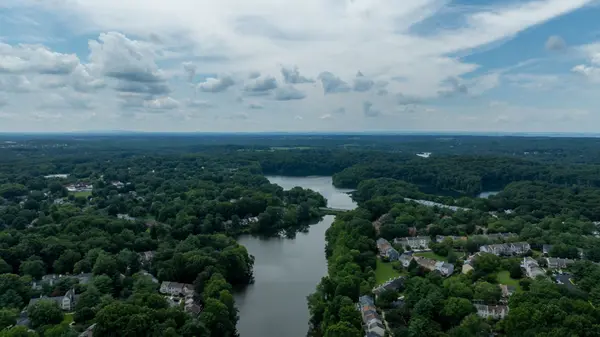
      Black Hill Regional Park-1
    Black Hill Regional Park-1
    rio
    montgomery county
    Black Hill Regional Park-1

    TRANSIT AND TRANSPORTATION

    Montgomery County boasts a well-developed transportation infrastructure, with major highways like I-270 (the "technology corridor") connecting Frederick to the Capital Beltway (I-495), which encircles Washington D.C. Key arterial roads include MD 355 (Rockville Pike/Wisconsin Avenue) and US 29 (Colesville Road/Columbia Pike).   Montgomery County's public transportation relies on WMATA's Metrorail Red Line, serving 13 stations from east to west and linking to D.C. The MARC commuter rail (Brunswick Line) connects northern county communities like Rockville, Gaithersburg, and Germantown to D.C.'s Union Station. The Ride On bus service provides local routes, connecting to Metro and MARC stations and employment centers.   Though Montgomery County lacks major airports, residents can easily access Ronald Reagan Washington National Airport (30–40 min drive or Metro accessible) and Dulles International Airport (approx. 1-hour drive or Metro Silver Line).   Montgomery County prioritizes walkability and cycling. Denser, transit-oriented communities like Downtown Silver Spring, Bethesda, and Wheaton are highly walkable. Cyclists benefit from nearly 100 miles of on-road bike lanes and over 280 miles of paved shared-use paths, including the Bethesda Trolley Trail. Capital Bikeshare is also available in many urban areas.

    SCHOOLS AND SCHOOL DISTRICTS

    The excellence of Montgomery County's educational environment is evident in the performance of its individual schools and the breadth of its academic offerings. Numerous Montgomery County Public Schools (MCPS) high schools are consistently featured in the top tiers of national and state rankings by publications like U.S. News & World Report. Schools such as Walt Whitman High School, Poolesville High School, Thomas S. Wootton High School, Winston Churchill High School, and Richard Montgomery High School are regularly lauded for their high graduation rates, college readiness metrics, and student performance on state and national assessments.


    A key feature of the district is its extensive array of specialized and application-based magnet programs. These highly competitive programs draw top students from across the county and include the prestigious, county-wide International Baccalaureate (IB) Diploma Programme at Richard Montgomery High School. For students focused on STEM, MCPS offers acclaimed Science, Mathematics, and Computer Science Magnet programs at Montgomery Blair High School and Poolesville High School. The district also provides popular and effective language immersion programs in Chinese, French, and Spanish, beginning at the elementary level and continuing through middle and high school.


    In addition to its outstanding public school system, Montgomery County is home to a large number of highly respected private and independent schools. These institutions offer a variety of educational philosophies and specialized programs. Prominent private schools in the county include Georgetown Preparatory School, Holton-Arms School, Landon School, Bullis School, St. Andrew's Episcopal School, and Our Lady of Good Counsel High School, among many others.

    • 160,000

      Students Enrolled in MCPS

    • 200+

      Number of Public Schools

    • 91.8%

      MCPS Graduation Rate

    • #2

      Best School Districts in Maryland

    SCHOOLS AND SCHOOL DISTRICTS

    The excellence of Montgomery County's educational environment is evident in the performance of its individual schools and the breadth of its academic offerings. Numerous Montgomery County Public Schools (MCPS) high schools are consistently featured in the top tiers of national and state rankings by publications like U.S. News & World Report. Schools such as Walt Whitman High School, Poolesville High School, Thomas S. Wootton High School, Winston Churchill High School, and Richard Montgomery High School are regularly lauded for their high graduation rates, college readiness metrics, and student performance on state and national assessments.


    A key feature of the district is its extensive array of specialized and application-based magnet programs. These highly competitive programs draw top students from across the county and include the prestigious, county-wide International Baccalaureate (IB) Diploma Programme at Richard Montgomery High School. For students focused on STEM, MCPS offers acclaimed Science, Mathematics, and Computer Science Magnet programs at Montgomery Blair High School and Poolesville High School. The district also provides popular and effective language immersion programs in Chinese, French, and Spanish, beginning at the elementary level and continuing through middle and high school.


    In addition to its outstanding public school system, Montgomery County is home to a large number of highly respected private and independent schools. These institutions offer a variety of educational philosophies and specialized programs. Prominent private schools in the county include Georgetown Preparatory School, Holton-Arms School, Landon School, Bullis School, St. Andrew's Episcopal School, and Our Lady of Good Counsel High School, among many others.

    CONTACT US

    FAQs: Living in Montgomery County

    What are the main industries driving Montgomery County, MD?

    The federal government has a major presence, with 18 agencies including the National Institutes of Health (NIH) and the Food and Drug Administration (FDA). This has fostered a world-class life sciences and biotechnology industry, making the county a top-three national hub. Additionally, the county is home to numerous corporate headquarters, such as Marriott International and Lockheed Martin.

    Is Montgomery County a safe place to live?

    How does the Montgomery County Public Schools (MCPS) system rank, and what special programs like magnet or IB are available?

    What are the primary commuting options for traveling from Montgomery County to Washington, D.C.?

    What types of housing and architectural styles are most common in Montgomery County?

    What are the key lifestyle differences between living in "Upcounty" communities like Germantown and "Downcounty" areas like Bethesda?